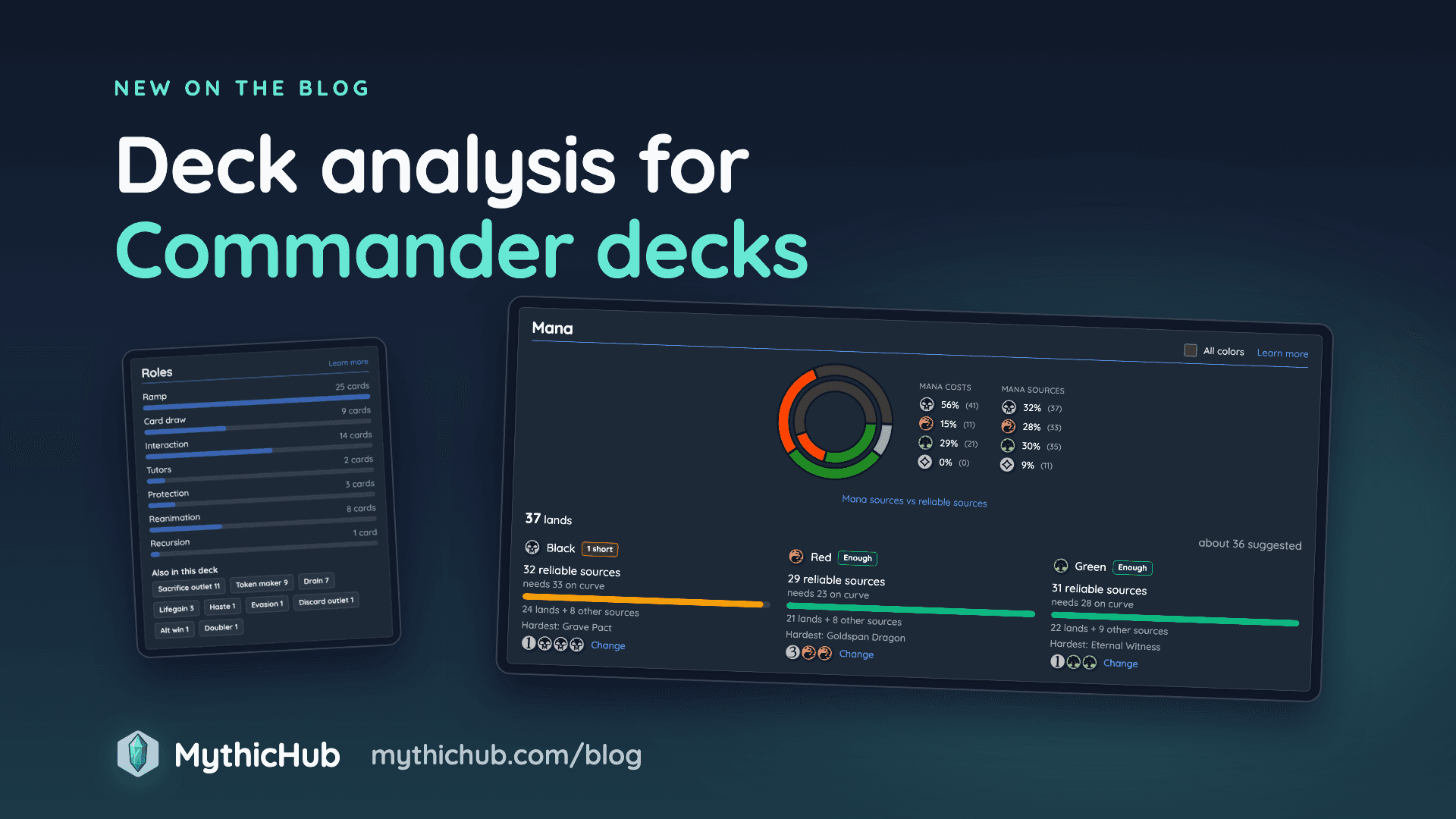
Deck Analysis for Commander Decks

Deck analysis is live! Commander decks on MythicHub now have a new section below the decklist that shows which bracket the deck fits, what its cards do, how the mana base is doing and which combos are in it. A few things in the decklist changed along with it.
If you want to read more about this update, there is a separate post on Patreon.
What's new
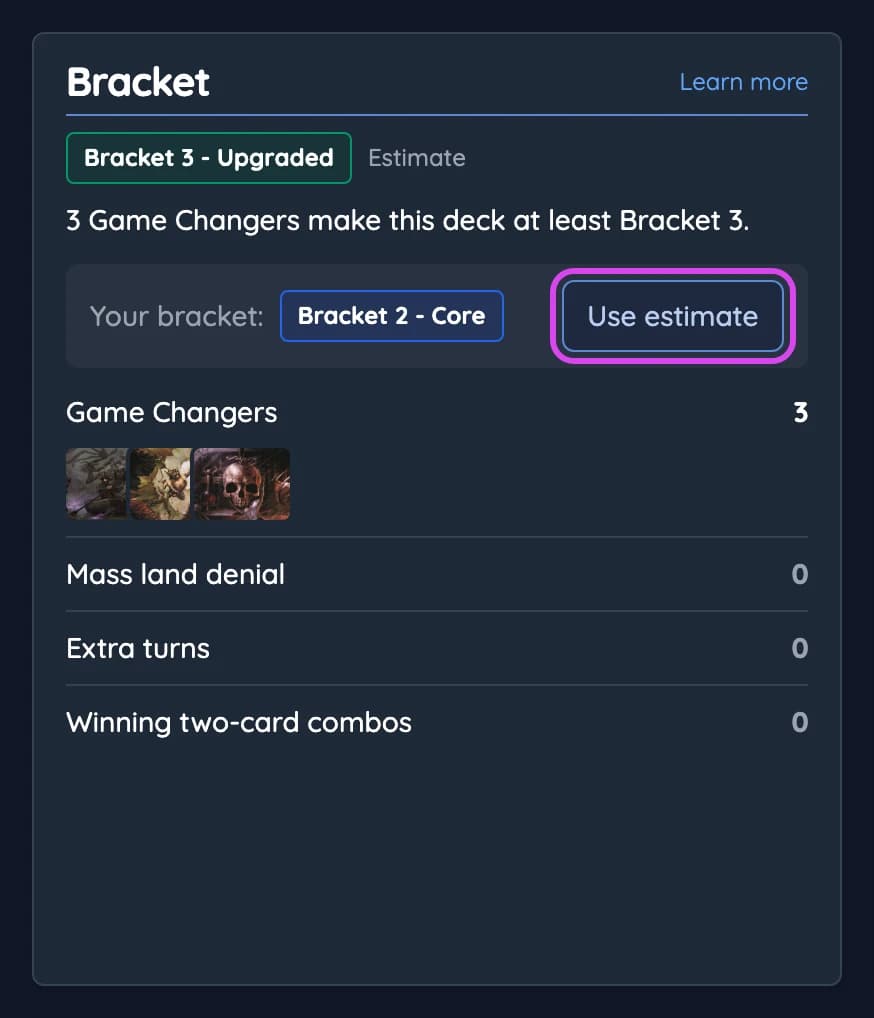
- a bracket estimate based on Game Changers, mass land denial, extra turns and two-card combos
- the number of cards for each role, like ramp or card draw, plus a separate look at interaction and resource denial
- a mana check that shows how many sources each color has and how many it needs
- opening hand odds
- combos from Commander Spellbook, both the ones in your deck and the ones one card away
- card roles instead of card tags, and a new Role option in Group by
Where to find it
Deck analysis sits below the decklist on every Commander deck page. The Analysis button above the decklist takes you straight to it. On phones the button is in Deck tools.

It's there on your own decks and on other players' public decks.
Bracket
The bracket estimate tells you which Commander Bracket your deck most likely is. It only uses the rules that can be checked from a decklist:
- one to three Game Changers put the deck in Bracket 3, four or more in Bracket 4
- mass land denial or chained extra turns put it in Bracket 4
- a two-card combo puts it in Bracket 3, or in Bracket 4 if the combo needs four mana or less
A deck that meets none of them is estimated at Bracket 2, and a deck that meets several gets the highest one. Brackets 1 and 5 depend on how you build and play, so they are never estimated. There is a description explaining the estimated bracket, so you know what to cut if you want to go lower.
The estimate never changes the bracket you set on your deck. If you agree with it, click Use estimate.
Roles
Roles are divided into: ramp, card draw, interaction, tutors, protection, reanimation and recursion. You can see right away if a deck is low on ramp or card draw. Clicking a role will show its cards. A card counts in every role it fits, for example is both card draw and protection. Below the roles, Also in this deck lists other themes the deck has, like Token maker or Lifegain.
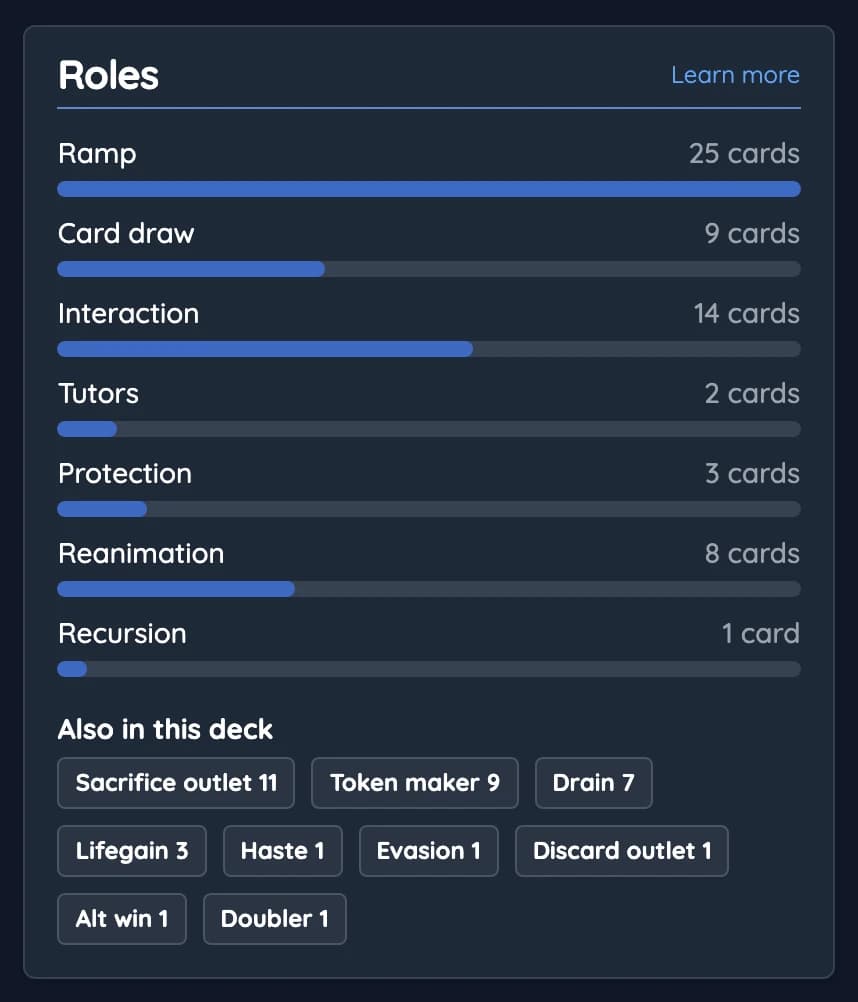
Roles are based on the card tags from Scryfall Tagger. A tag describes the card in general, so it can be off for the way you use the card, and very new cards may have no tags yet. If the default assigned role doesn't fit its purpose in a decklist you can change it in the edit dialog under Role. The first option, like Ramp (default), comes from Scryfall.
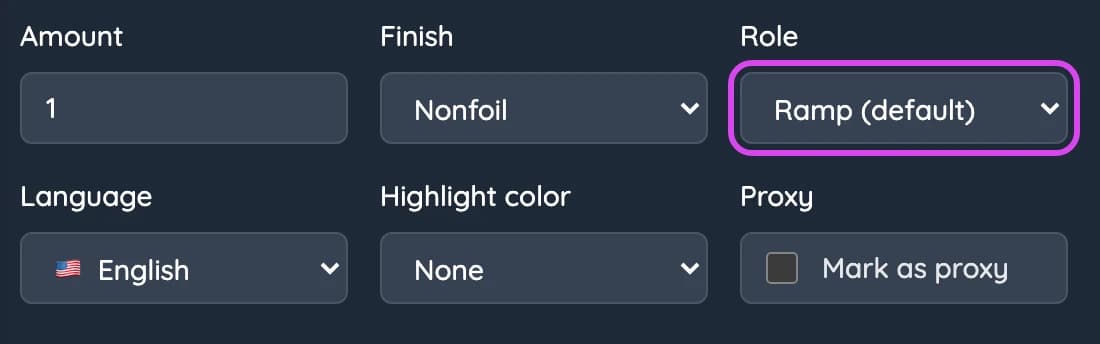
The decklist has a new grouping as well. Choose Role under Group by and each card shows up once, under the role you picked for it or under its default role.
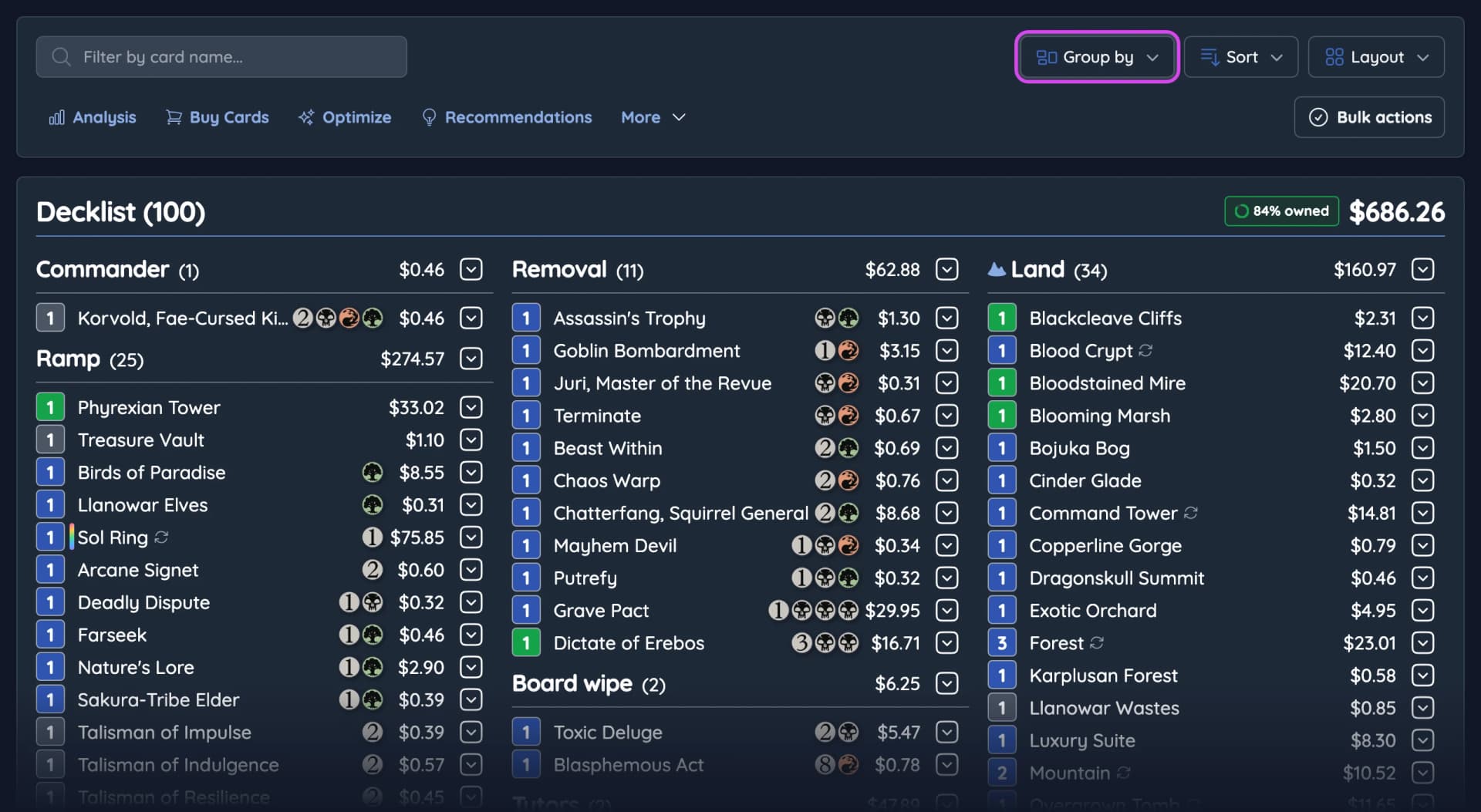
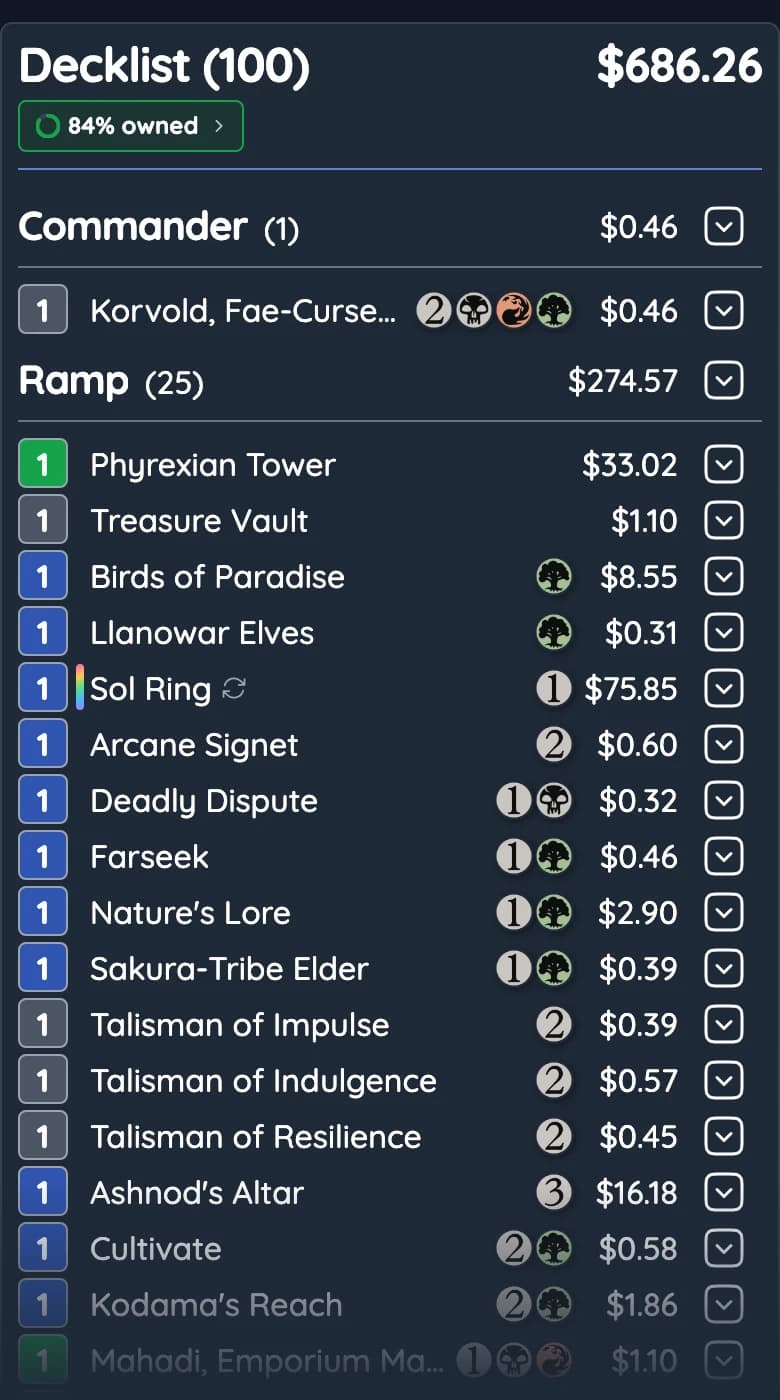
Roles replace the old card tags. If a card had a tag that names a role, like Ramp, it is now the card's role. All other tags were moved to the card's notes, so you don't lose them.
Disruption
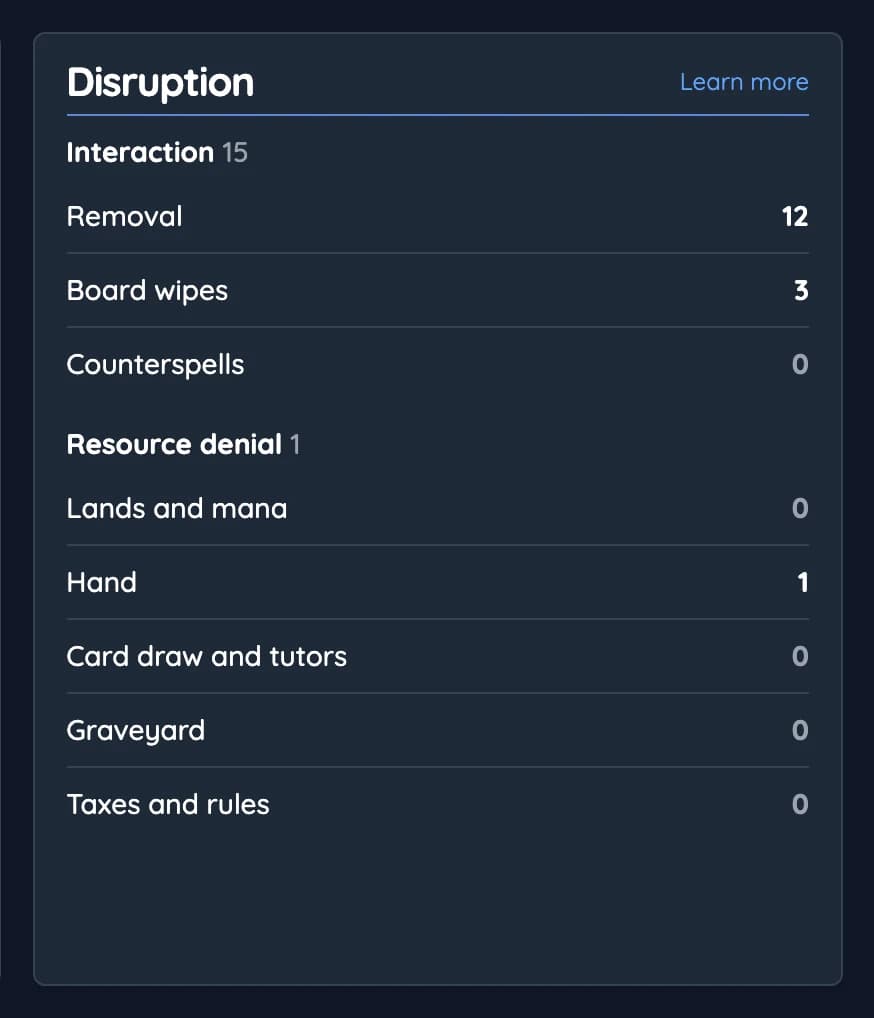
Disruption is about how the deck stops other players, and it's split into interaction and resource denial. Interaction is removal, board wipes and counterspells, so cards that answer something an opponent already did. Resource denial is cards that limit what opponents can do in the first place, like land destruction, discard, graveyard hate or tax effects. A card can be in both groups, so don't add the two totals together.
Mana
The mana part is based on Frank Karsten's articles How Many Sources Do You Need to Consistently Cast Your Spells? and How Many Lands Do You Need in Your Deck?, using his tables for 99-card decks.
Mana sources are counted in two ways. The doughnut chart compares the mana pips in your costs with your mana sources, and here the sources are counted in a simple way: every land, mana rock or mana creature that can make a color is one source of that color. If black is half of your pips but only a third of your sources, black is the color to fix first.
Next we have the land count, so how many lands the deck has and how many it should have. The suggested number goes up with the deck's average mana value and goes down for every ramp or card draw card that costs two mana or less.
The last one is the stricter count, and this is where Karsten's numbers come in. Every color gets its number of reliable sources, meaning the ones you can count on in the first turns of a game. A land counts as 1, a mana rock as ¾ and a mana creature as ½, while Treasure makers and rituals don't count at all (the full table is on the help page). That number is compared with how many sources you need to cast the hardest card of that color on curve about 90% of the time, so a four-mana spell on turn four. The hardest card is usually a cheap one with several pips of the same color. on turn two needs 30 black sources, while on turn seven needs only 20, because only two of your seven lands have to make black.
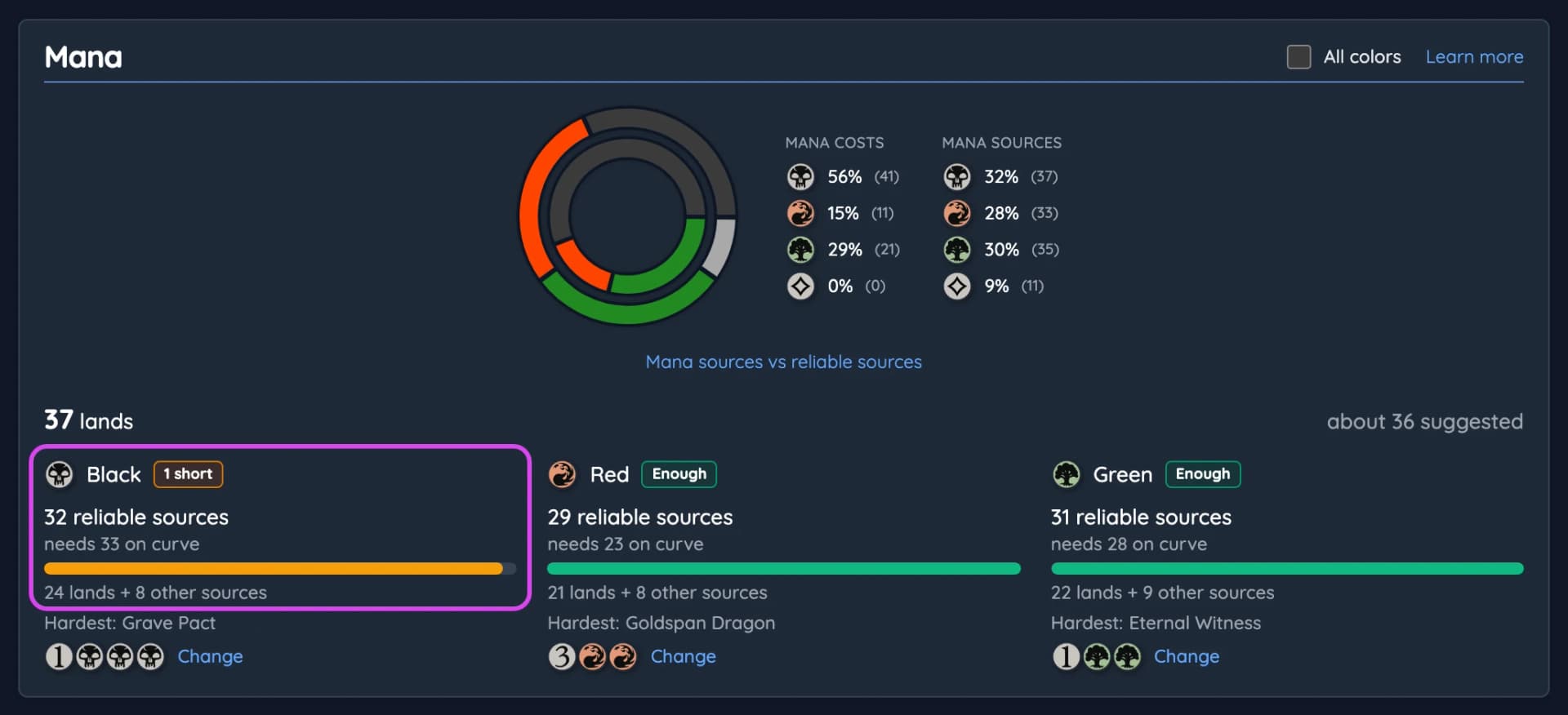
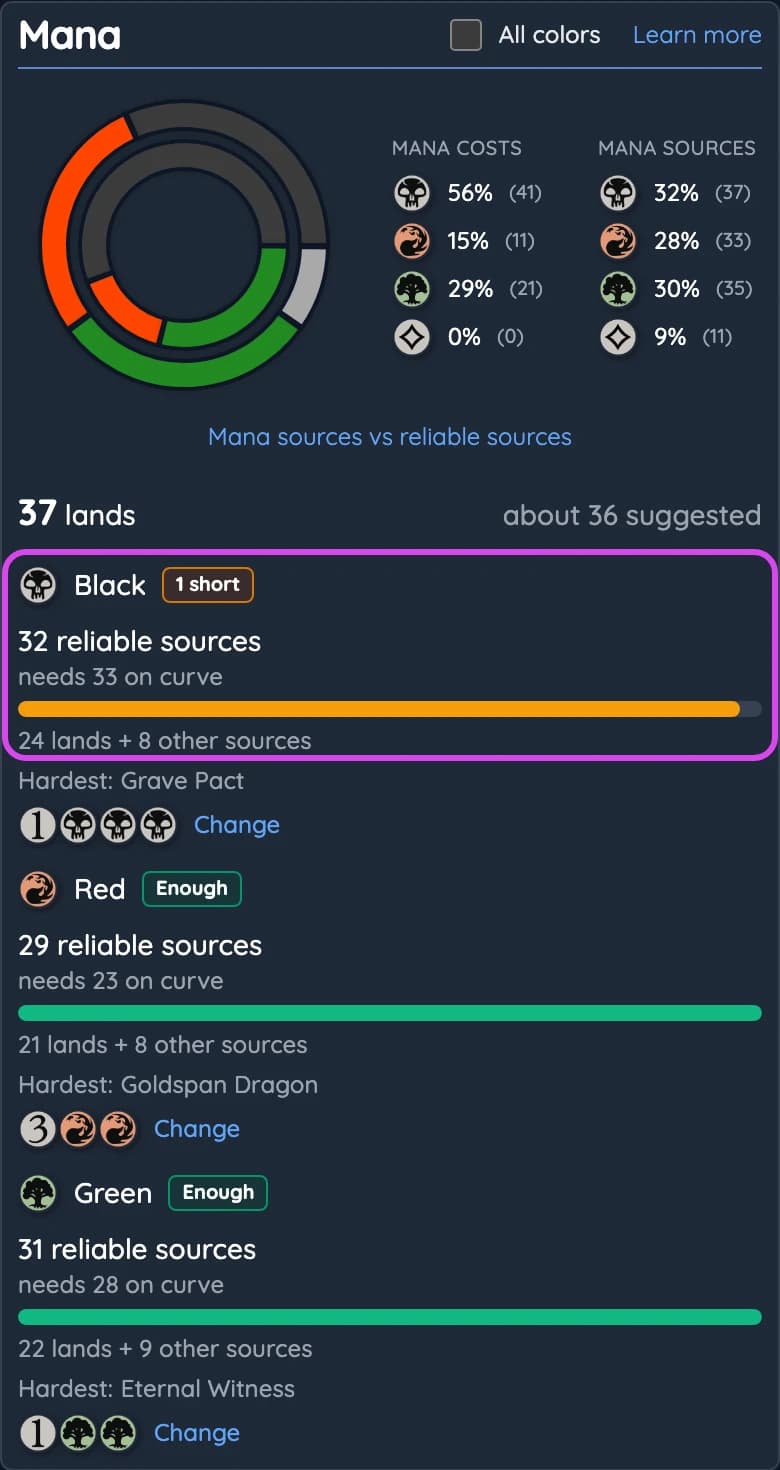
In the deck above black has 32 reliable sources and needs 33, so black is 1 short. Grave Pact will still get cast, just a bit later than turn four in some games. If the hardest card is one you never need early, click Change and pick another card for that color.
A few of Karsten's smaller rules are left out to keep things simple, and the help page lists every difference.
Opening hand
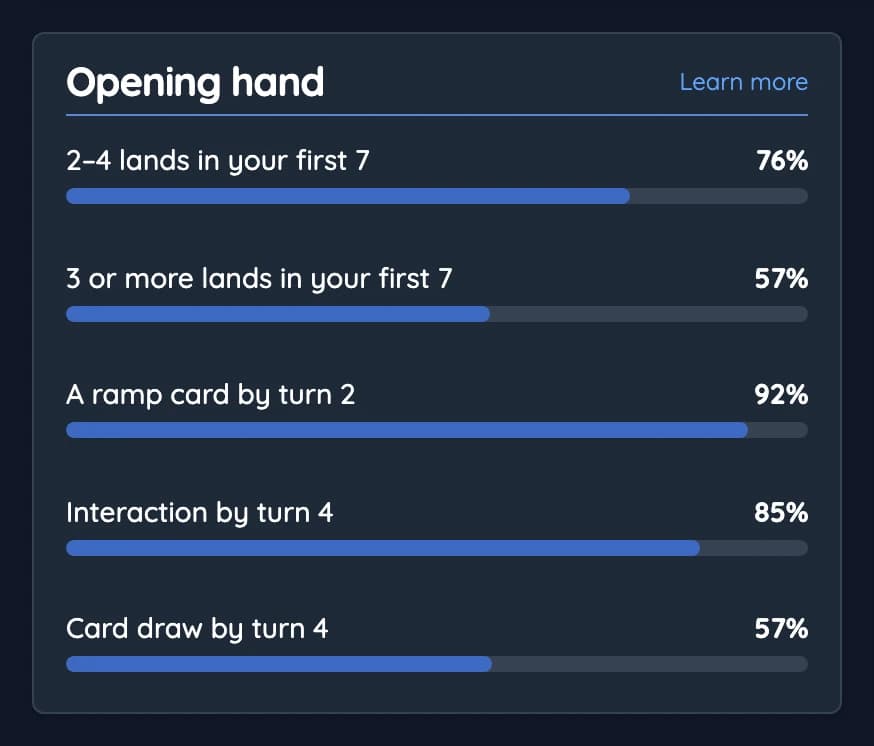
Opening hand is the odds of a good start: 2 to 4 lands in your first seven cards, a ramp card by turn 2, and interaction and card draw by turn 4. It assumes a random seven-card hand without mulligans.
Combos
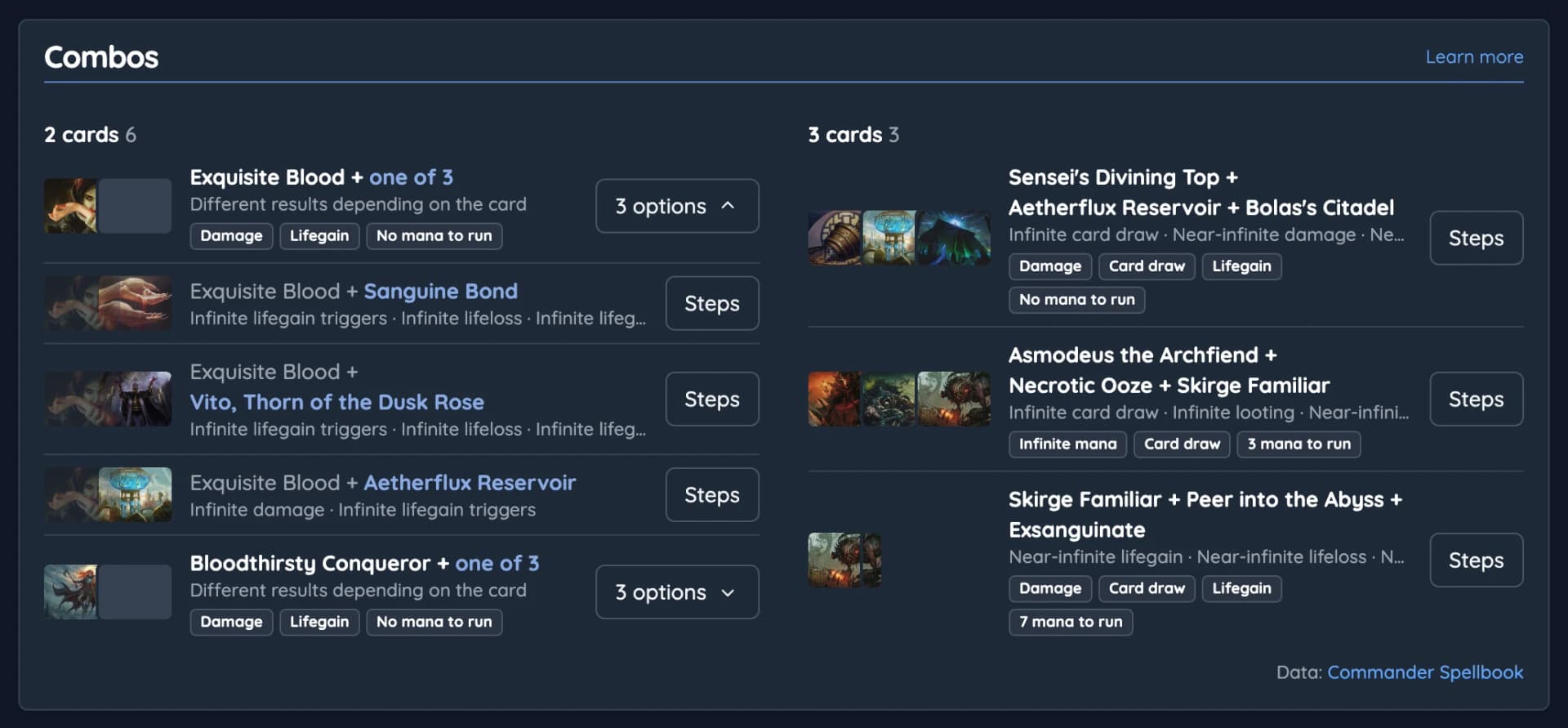
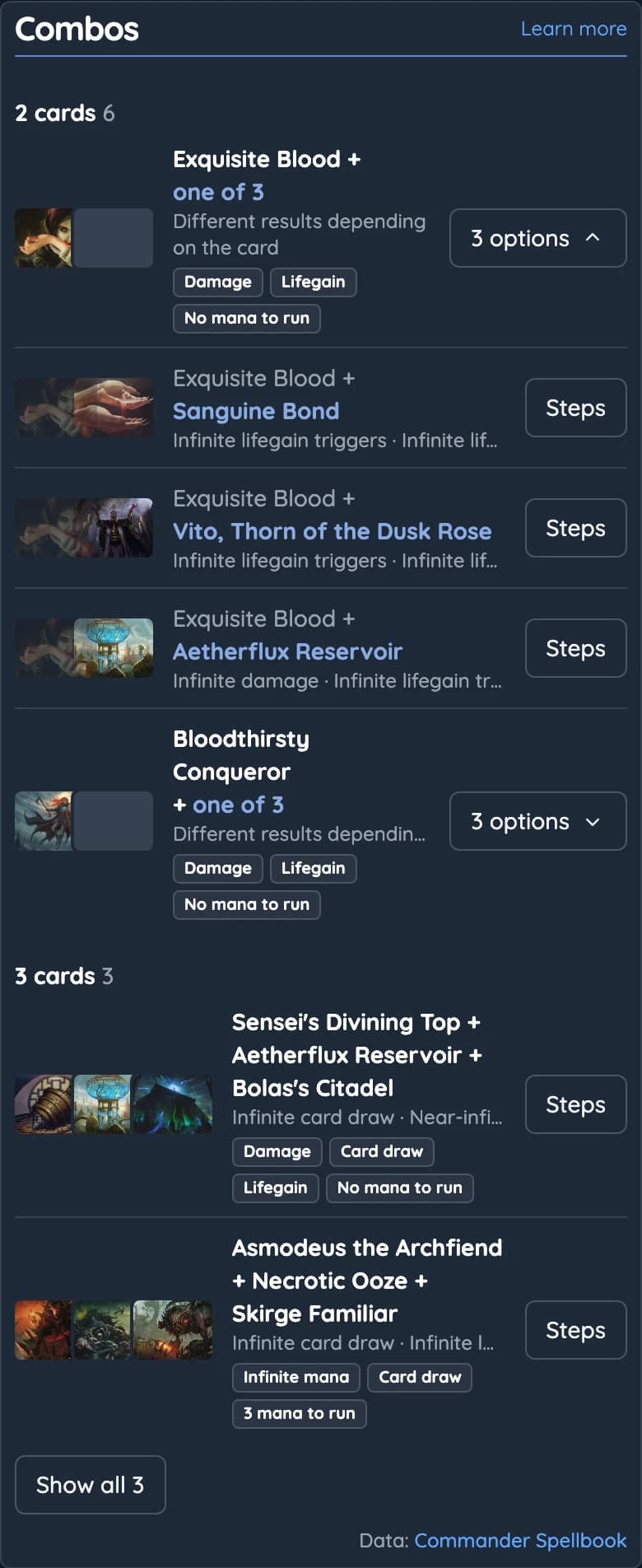
Combos come from Commander Spellbook. In this deck lists the combos your deck already has, grouped by how many cards they need, with the most popular ones first. For each combo you can see what it does, like Infinite mana or Damage, how much mana it takes, and under Steps how to pull it off.
Some cards combo with several others. In my deck (open the deck to see the whole analysis) combos with three different cards, so instead of three separate combos you get one with 3 options.
One card away lists the cards that would complete a combo with what is already in your deck. The cards that complete the most combos are first, and Add puts the card into your mainboard. Only you see this tab on your own decks. Other people see the combos the deck already has.
It helps when a deck needs a way to finish games, because one extra card is often enough. It also shows which combos you are close to without planning them. Two-card combos can raise the bracket estimate, so keep that in mind before you add one.
Thank you
Thanks to jacopogf and radixtrator for all the feedback and ideas while I was working on deck analysis!
If a card has the wrong role or a number looks off for your deck, email me at matt(at)mythichub.com or use the feedback form.
Happy brewing!